How much pattern you want on the tile
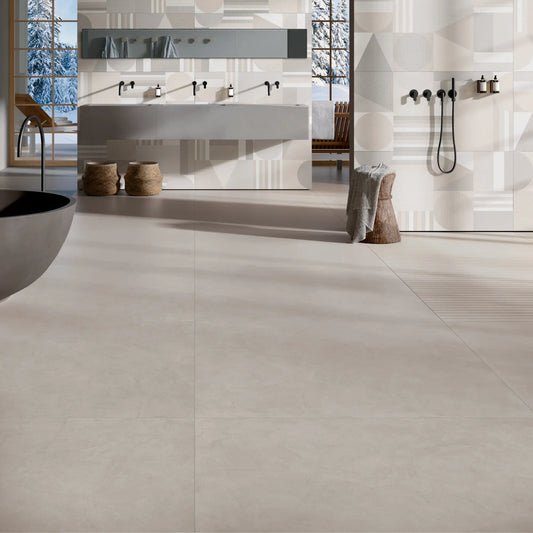
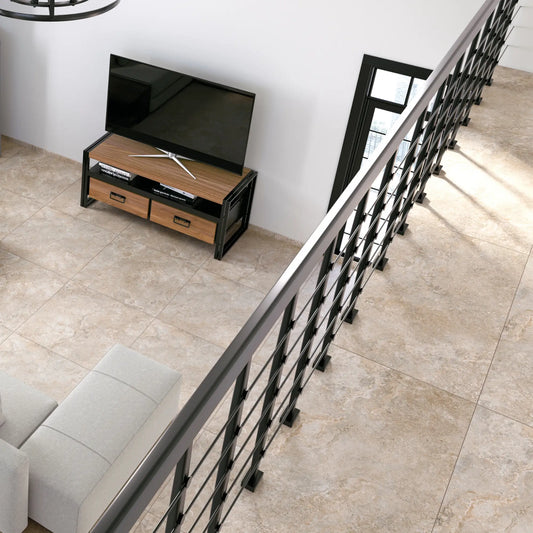
On a tile of this size the pattern has room to develop without being cut by the grout lines, and that is exactly why the choice of effect weighs more than on a small size: what would be a detail on a 30x60 becomes the character of the room here. The practical criterion is how much you want the surface to move.
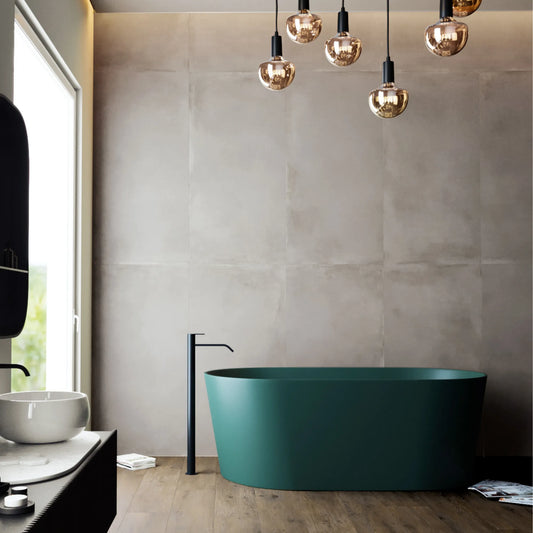
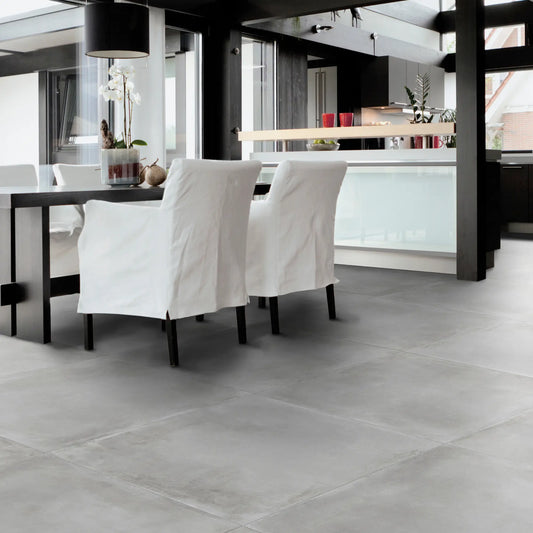
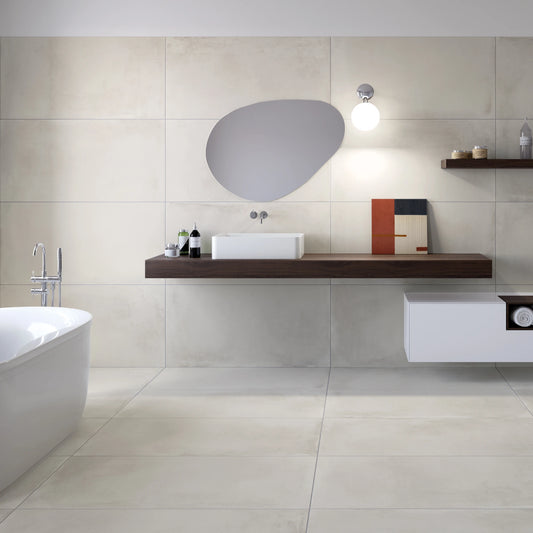
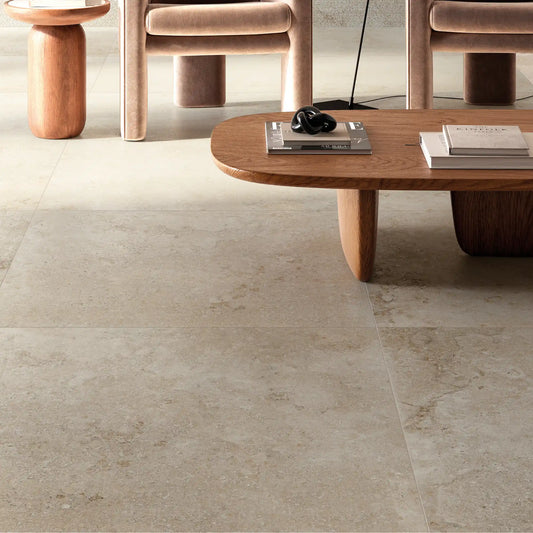
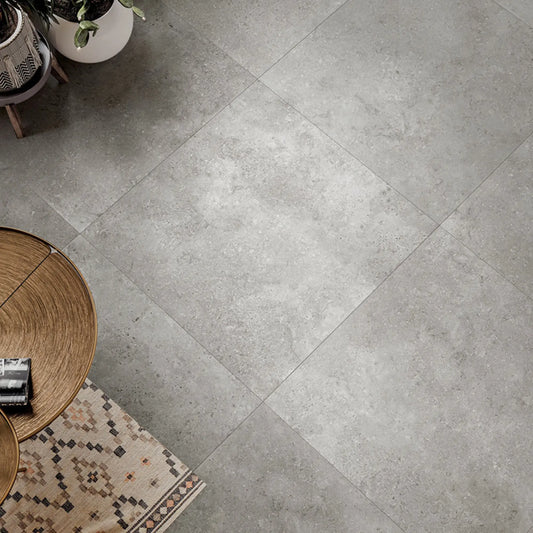
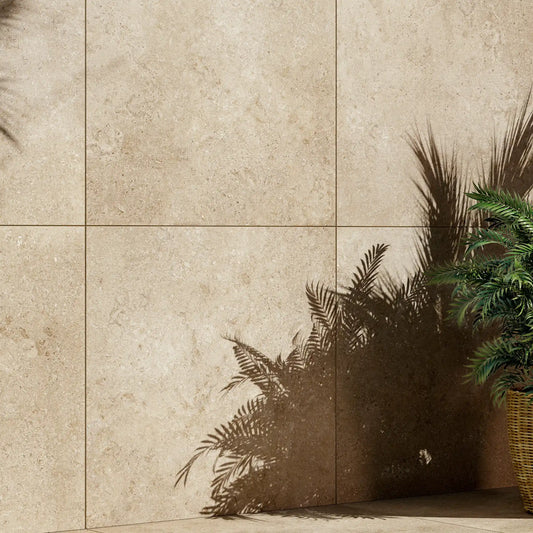
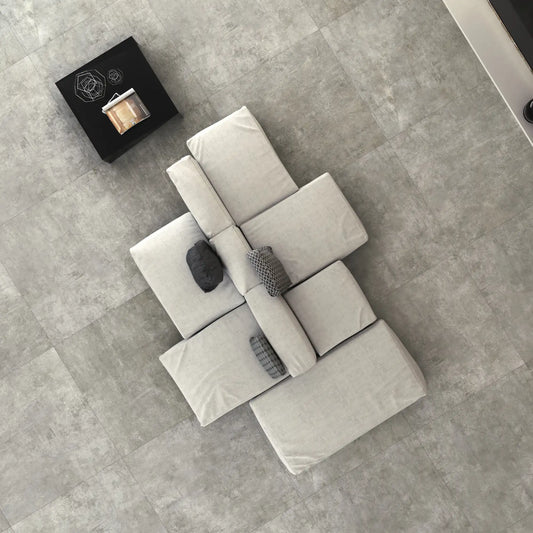
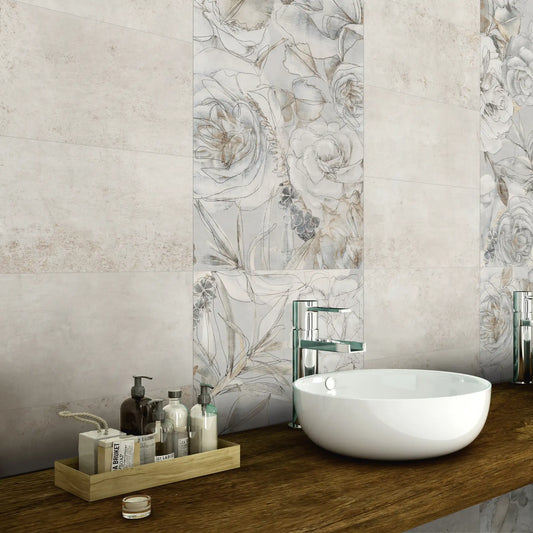
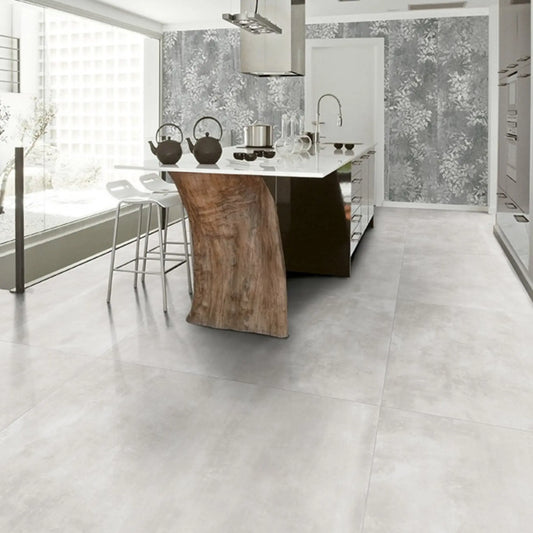
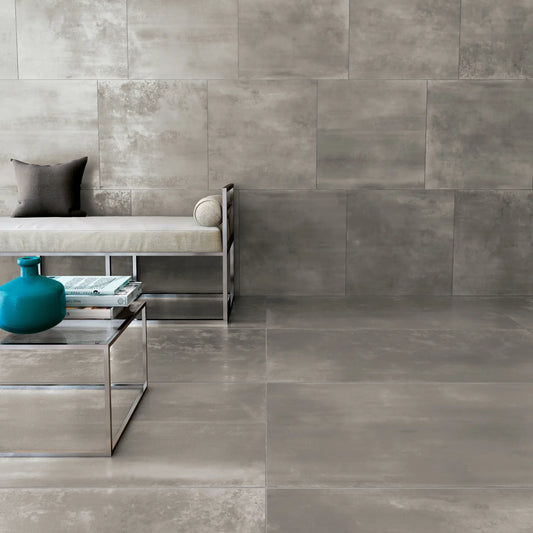
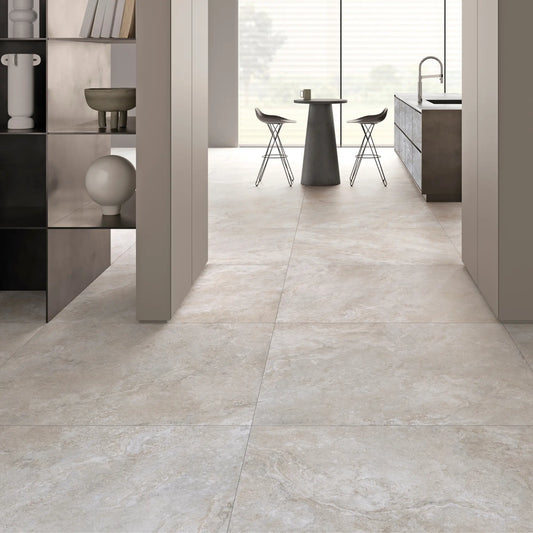
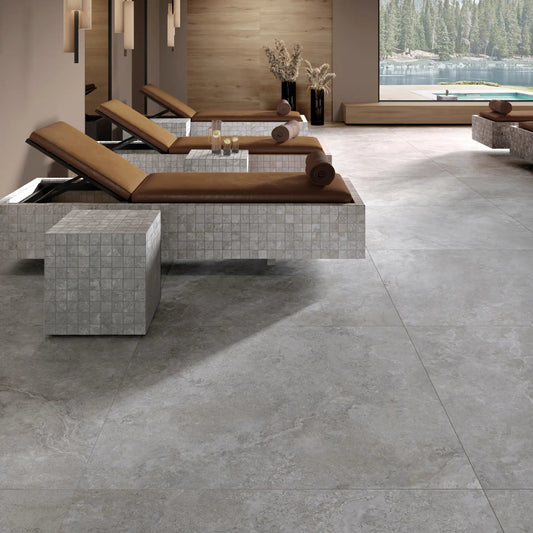
Concrete is the largest group in the selection and covers different registers: from the quieter surfaces, with clouding and light tonal variation that on the large format become a continuous field, to those with more marked movement. Stone is the second group by breadth and alternates the more regular variants with those of evident grain and layering, where the large format gives back the substance of natural stone. Marble brings broad veining, which on the large tile develops in full instead of being cut by the grout lines. Metal, finally, adds oxidation and reflections: it is the most assertive choice, and across a wide surface it shows.
The tones available
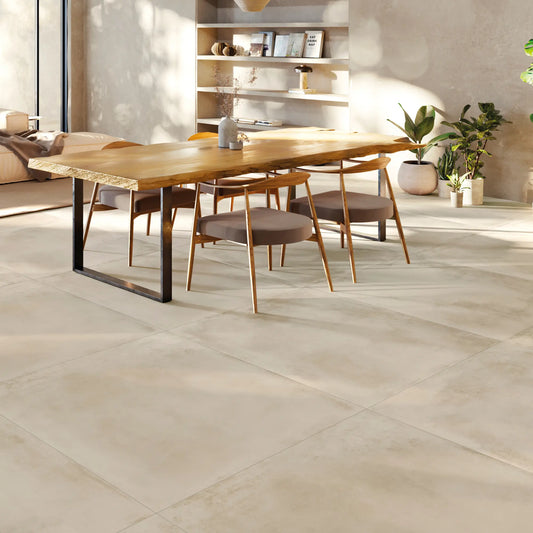
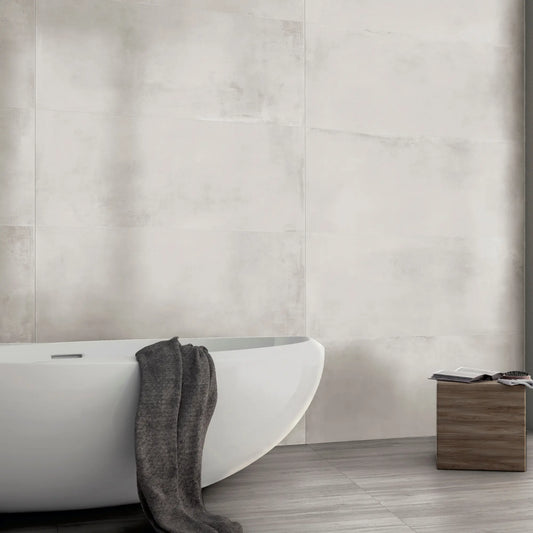
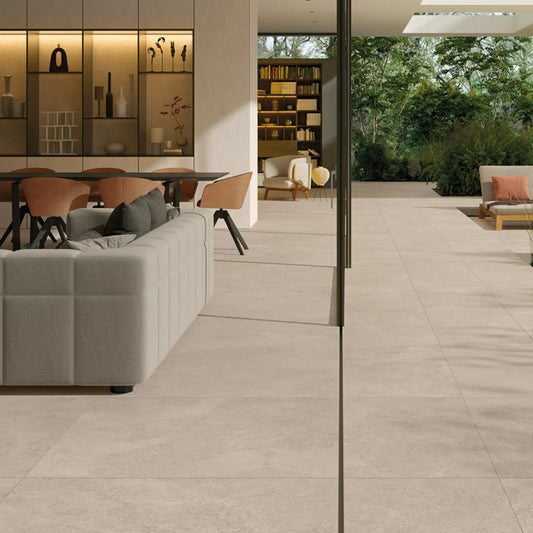
On a continuous floor the tone counts more than anywhere else, because nothing interrupts it: no module, no grid, no grout line to break the colour. The range splits almost in half between the greys, which cool the room down and sharpen its geometry, and the pale tones — whites, ivory, beiges, sand — which widen the space and absorb less of the natural light.
Among the pale tones, the whites of marble-effect porcelain tiles are the only ones that also carry recognisable veining, while stone and concrete stay on more even grounds. At the opposite end the dark tones, from the deep greys down, draw the perimeter of the room and perform best where light is plentiful.
Coordinating 120x120 with the other sizes
Most of the tones available in 120x120 also exist in 60x120 and across a wide range of other sizes, and that is the most useful solution when a whole home is being furnished. The large square stays in the living area, where it has the continuous surface it needs; in smaller rooms or ones with a broken perimeter you move to a smaller module, which adapts better to the cuts.
The advantage is that the colour does not change: the same tone runs through the rooms even where the module differs, and the passage from one room to the next stays coherent without imposing the same size everywhere.
Frequently asked questions
Which effects are available in 120x120?
Four: concrete, stone, marble and metal. Concrete is the largest group, followed by stone, then marble and metal.
Can the same tone be used in another size?
In most cases yes. Many variants also exist in 60x120 and in other sizes, so the module can change from one room to the next while staying on the same colour.
What is worth knowing before ordering the large format?
The flatness of the substrate and any site access constraints are the two checks to make before buying, not after. Screed, laying equipment, waste and minimum recommended areas are covered in the guide to the 120x120 size.