The right size for the splashback
The band between the worktop and the wall units is the most exposed surface in the kitchen, and also the most constrained: it usually measures between 50 and 60 centimetres in height. It is a measurement that sorts the sizes out, because up there every grout line shows.
The 60x120 laid horizontally is the cleanest solution: a single tile covers the full height of the band, without one horizontal grout line, and along the length a few pieces cover the whole wall. 30x60 calls for two stacked rows and gives back a more traditional rhythm, which works when the wall units are wooden or the kitchen has a classic line. 60x60 remains the middle ground, with a single horizontal grout line and contained cuts at the ends.
The floor and continuity with the living area
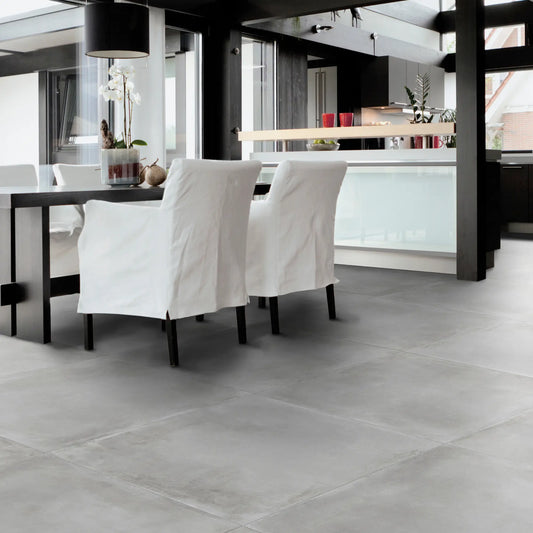
In contemporary homes the kitchen is rarely a closed room, and the floor is the element that decides whether the space reads as one or as two. Carrying the same surface from the cooking area into the living room unifies the space and makes it feel larger; interrupting it with a different material marks out the working zone, a choice that makes sense when the kitchen is heavily used. For continuity the large sizes — 90x90, 120x120 and 80x160 — are the most effective, because they reduce the grout lines exactly where the eye crosses between the two areas.
Among the effects in the range, concrete lends itself best to continuity: its neutrals, from white to dark grey and on to sand and taupe, sit with both lacquered and wooden units. Wood effect works in the opposite direction, bringing warmth into a room dominated by technical surfaces. Stone and marble remain the choice for anyone who wants the floor as a recognisable element, with marble often coordinated to the worktop, while metal effect is the most assertive choice, the one that gives character when the units are neutral and the room risks feeling anonymous.
How the surfaces behave in use
The kitchen is the room where surfaces work hardest: oil and food acids on the floor, steam and splashes on the wall, chairs dragged across and objects dropped. Porcelain is not porous, so it does not absorb greasy substances and cleaning asks only for a neutral product.
The surfaces currently in the range are all matt or satin, and in the cooking area that is the finish that tends to show grease marks least. It is worth choosing the grout colour carefully too, since near the hob it marks sooner than elsewhere.
For the full picture on choosing kitchen tiles — from pairings with the worktop to sizes — we have written a dedicated guide.
Frequently asked questions
Which size works for a splashback?
60x120 laid horizontally covers the height of the band with a single tile, with no horizontal grout lines. Alternatively, 30x60 in two rows gives a more traditional rhythm.
Can the same effect be used on the floor and on the splashback?
Yes, and it is a frequent choice: repeating the same surface on the floor and behind the worktop holds the room together when the units play on two different colours. Being porcelain, the same references are laid on floors and on walls, including in different sizes.
Does porcelain stain with oil and sauces?
No: the surface is not porous, so greasy substances stay on top and come away with a neutral or degreasing product. It is better not to let them dry for long, though, above all on the more textured finishes, where residue can settle into the relief: in that case a non-abrasive sponge is enough, avoiding acidic products and mechanical abrasives.