When 60x60 is the right call
It is the size that asks for the fewest compromises. The 60-centimetre square noticeably reduces the grout lines compared with smaller sizes, but stays contained enough to adapt to any perimeter: where there are niches, columns, drains or corners that are not at 90 degrees, the cuts stay few and the waste low.
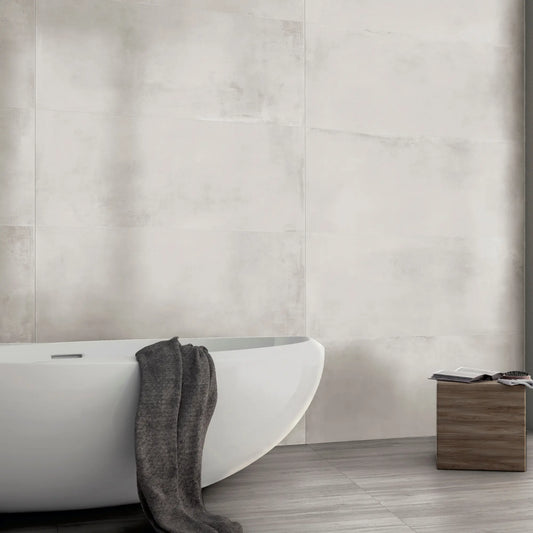
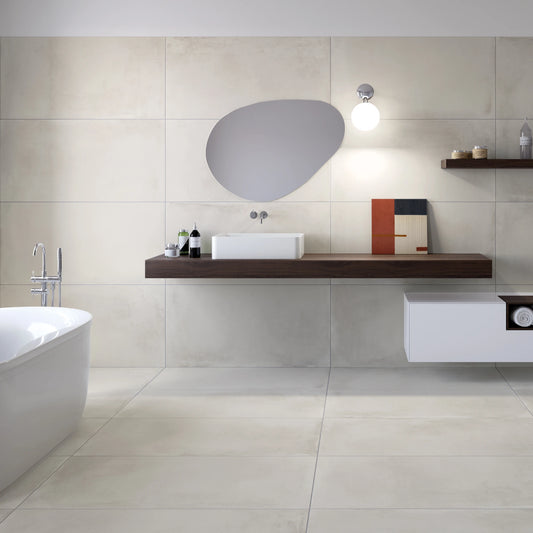
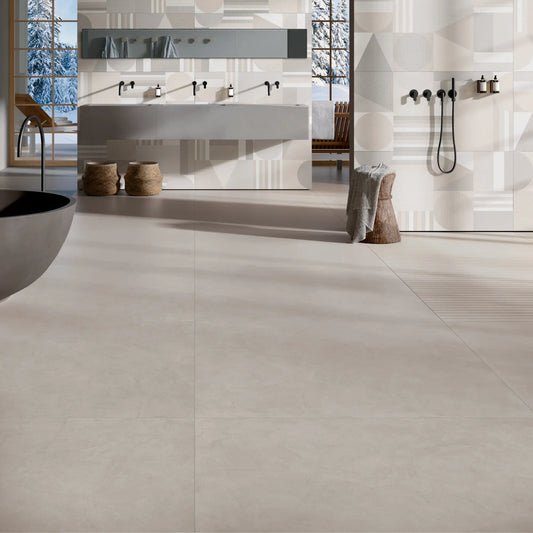
It is also why it works well in the bathroom and in rooms of contained size, where a larger size would produce more cut pieces than whole ones. Laying it calls for no particular equipment and no second pair of hands, and that weighs on the overall cost of the job more than the difference in price per square metre does.
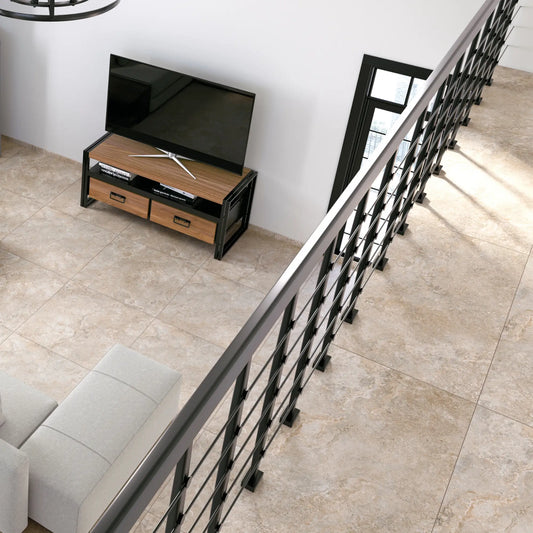
It also remains the most convenient size when a whole home is being tiled: the rooms of a house have different dimensions and geometries, and a medium module gives the same result everywhere without forcing a change of size from one room to the next.
For the full picture on the 60x60 size we have written a dedicated guide.
The effects available
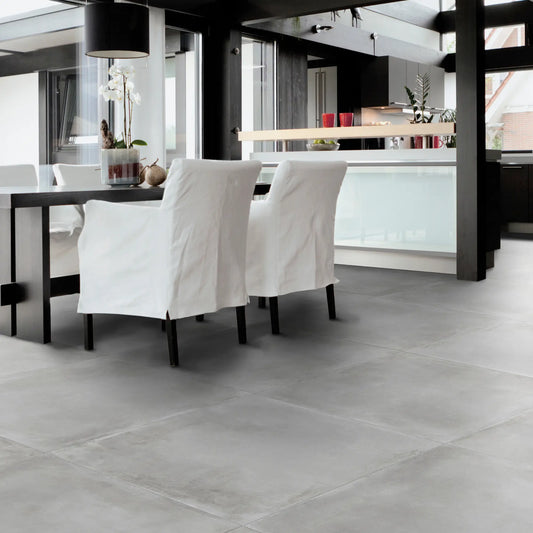
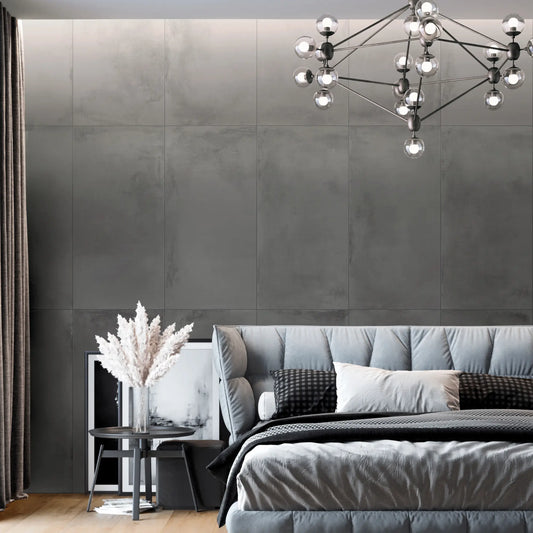
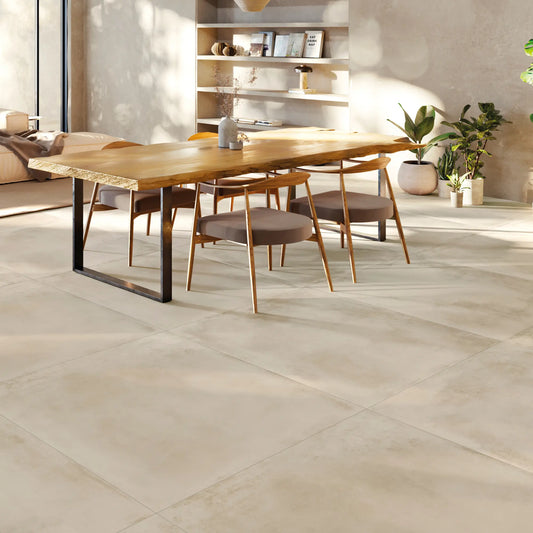
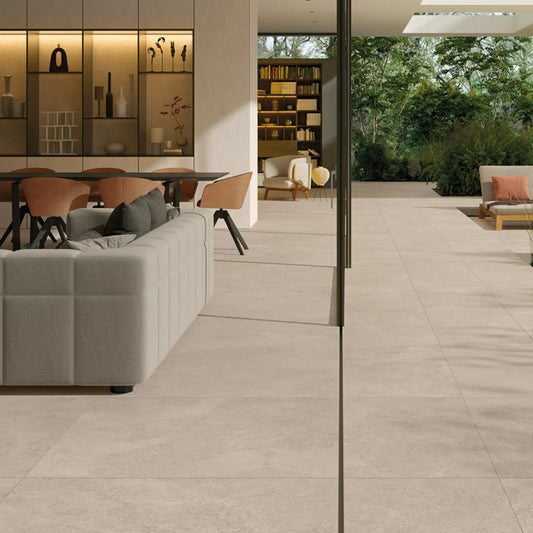
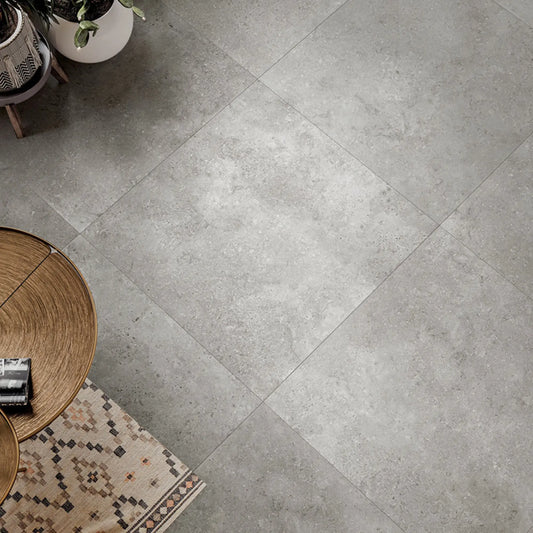
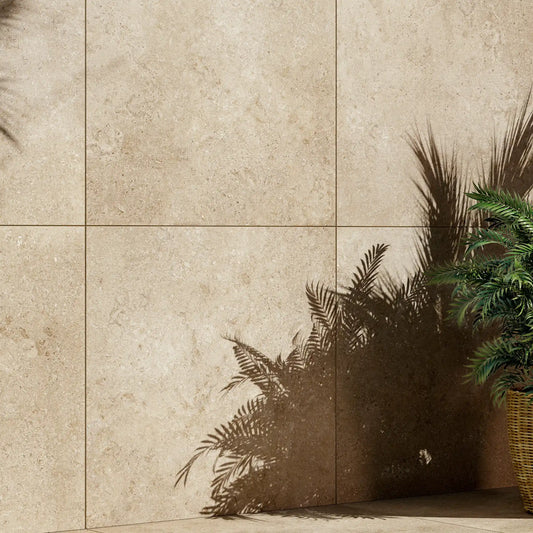
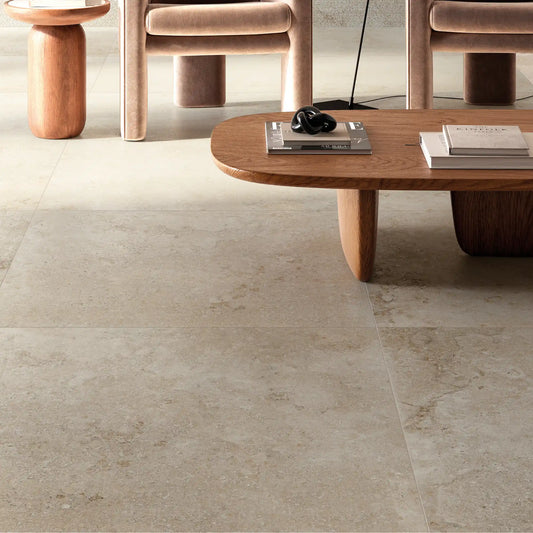
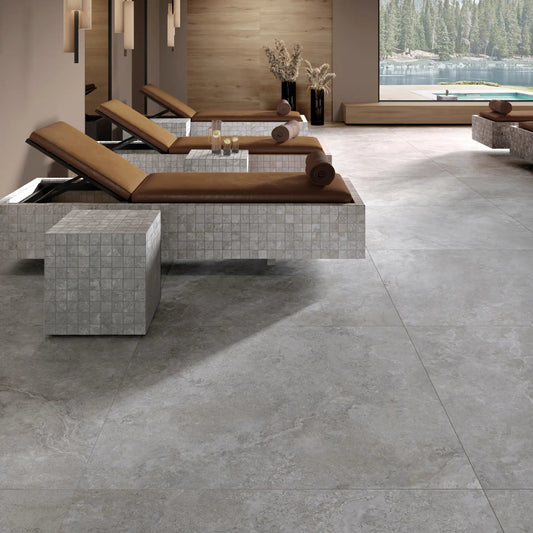
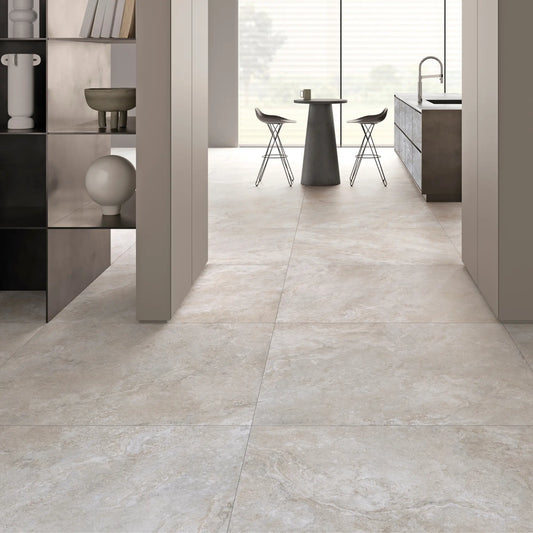
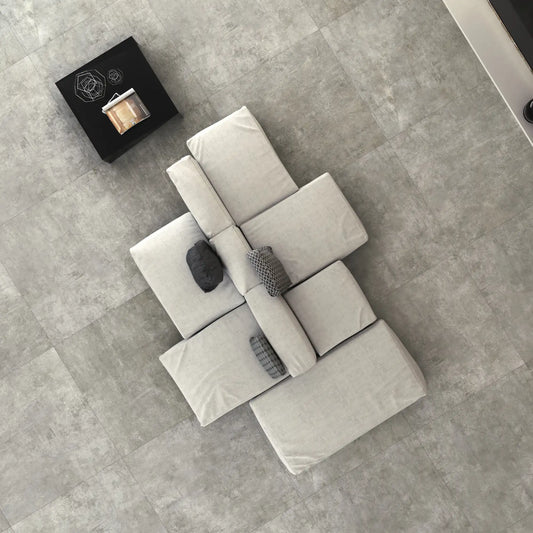
Concrete is the largest group, with a scale of neutrals running from white to dark grey by way of sand, beige and taupe. Stone follows closely and alternates cool greys with warm beiges, with surfaces from the more regular to those whose pattern leans on the material. Marble brings the veined whites and a few more assertive tones.
Metal and a coffered version of the wood effect, with an inlay pattern, complete the selection.
In colour terms the range stays on the neutrals: greys are the largest group, followed by beiges and whites, with a few browns and two dark tones. It is a range that sits easily with pale furniture and dark furniture alike, and it is one of the reasons this size gets chosen even when the furnishings are not yet decided.
When to move to a larger size
The difference between 60x60 and the larger sizes is not one of quality but of result. On wide, regular surfaces 60x120 halves the grout lines and gives a more continuous reading, and in very large spaces the 120-centimetre square takes that effect to its maximum.
The criterion is the continuous surface available: the freer the perimeter is of interruptions, the more a large size delivers what it promises. In a fragmented space the opposite happens, and 60x60 remains the choice that gives the best result with the least work.
Frequently asked questions
Which effects are available in 60x60?
Five: concrete, stone, marble, metal and a coffered version of the wood effect. Concrete and stone are the largest groups.
Can it be used on walls too?
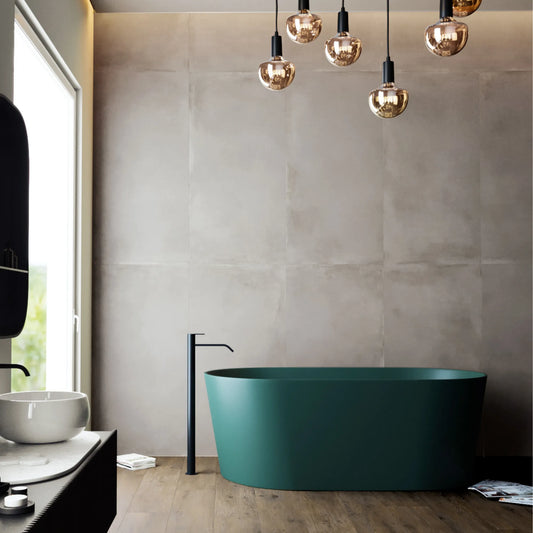
Yes. 60x60 is laid on walls as well as floors, and the most frequent choice is to coordinate the two surfaces on the same tone, particularly in the bathroom.
Is it better than a larger size?
It depends on the room. In wide, regular spaces the large sizes give a more continuous surface; where the perimeter is irregular or the floor area contained, 60x60 reduces the cuts and simplifies laying without giving up an even result.