Warm or grey tones: where to start
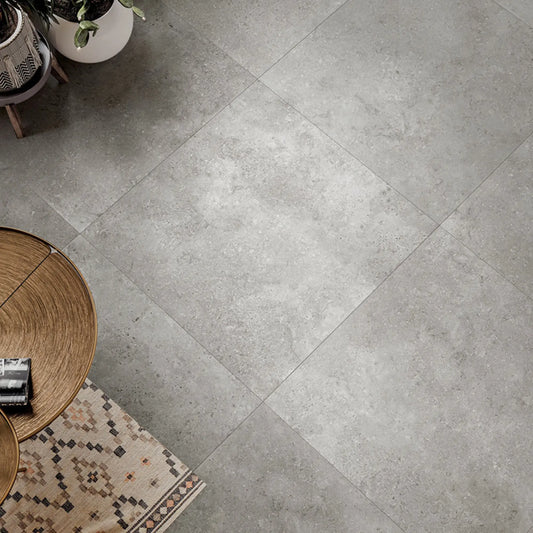
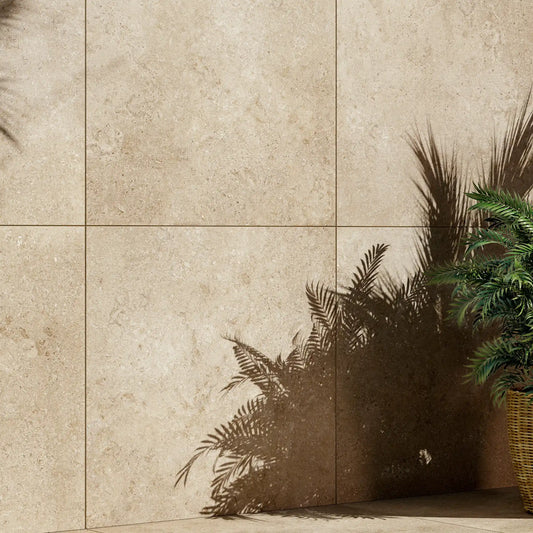
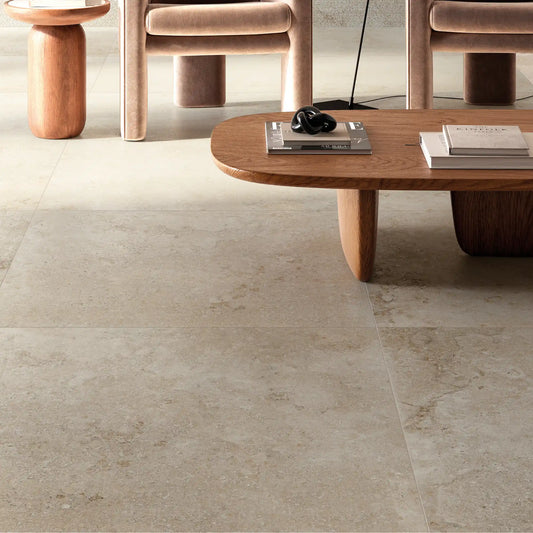
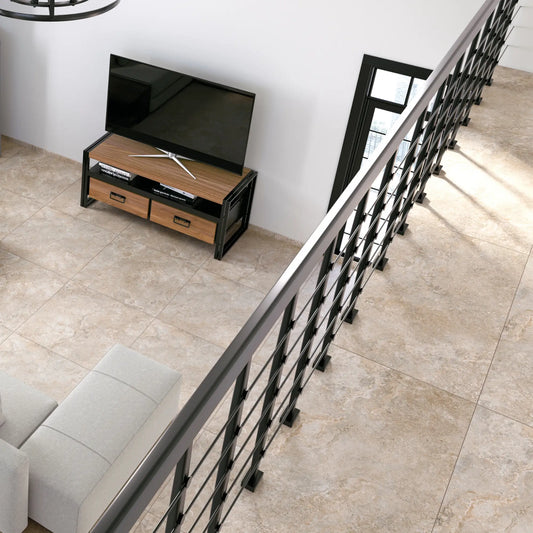
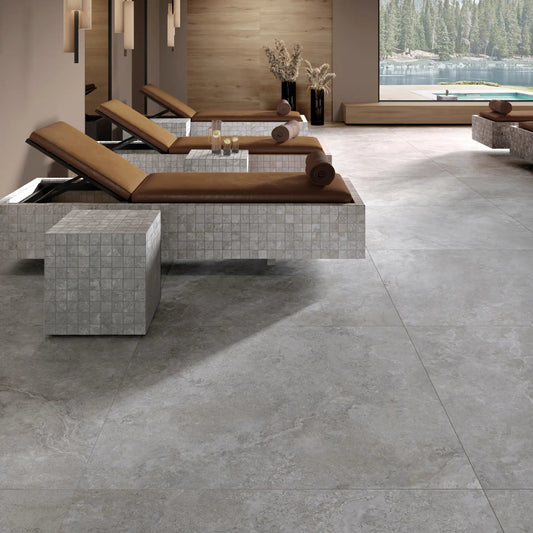
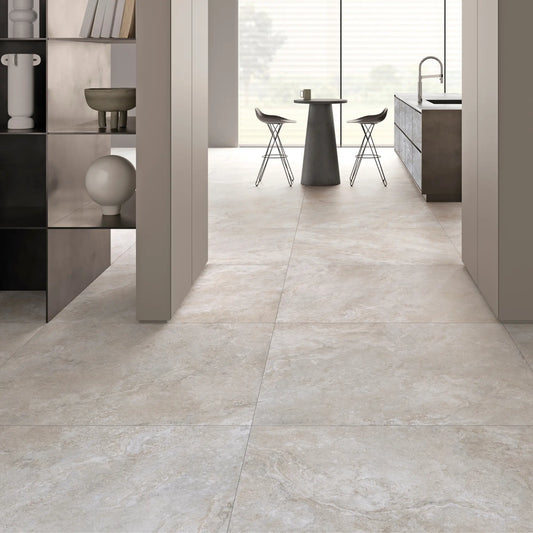
Almost the whole range splits between two colour temperatures, and that is where the decision is made. Greys — from pale pearl through smoke to anthracite — cool a room down and sharpen its geometry: they work where the furniture is linear and the materials are metal, glass or matt lacquer. Beiges, along with sand and ivory, do the opposite: they soften volumes and hold the warm evening light, which is why they hold up better in large rooms, where a cool floor risks feeling distant.
The practical rule is to look at the aspect of the room before the colour. A north-facing room takes cool light all day, and a grey floor accentuates it instead of balancing it; a south-facing room carries grey without difficulty and gains in balance. For the full picture — types of stone, slip-resistance ratings, sizes by room — see the guide to stone-effect tiles.
Six sizes, from 30x60 to 80x160
The stone texture reads differently depending on how much continuous surface it has to work with. On the large format tiles — 120x120 and 80x160 — the grain develops without interruption and the floor is read as a single plane: this is as close as it gets to natural stone laid in large pieces. 90x90 and 60x120 remain a balanced middle ground, with less waste and a simpler installation. 60x60 is the easiest to handle in small or awkwardly shaped rooms, where the largest sizes would mean too many cuts.
30x60 is the wall size: on a shower wall or as a kitchen splashback, the smaller module keeps proportions that a large size would lose, and the mineral texture works just as well vertically.
Each size has its own section where all the effects sit together: 120x120 porcelain tiles, 60x120 porcelain tiles and 60x60 porcelain tiles.
Stone-effect tiles outdoors
This selection is designed for indoor use. Outdoors the choice is not about looks but about slip resistance: a surface that suits a living room becomes treacherous on a wet terrace, and what is needed there is class R11, the only rating that guarantees grip with water underfoot. Frost resistance comes on top of that, and on exposed balconies and paths it makes the difference within a few winters.
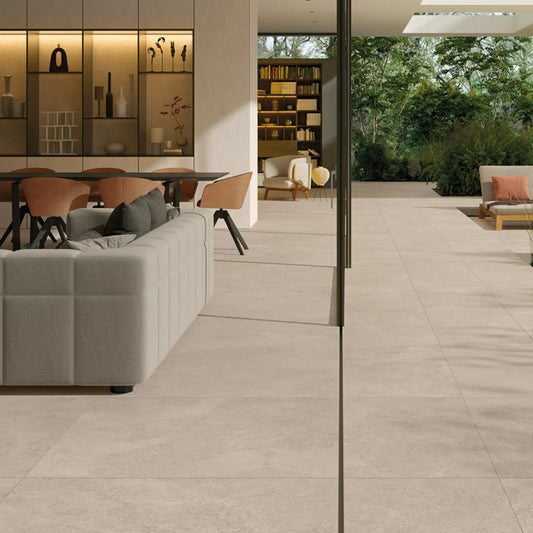
The R11 versions of the stone-look range, with the properties that terraces, paths and pool edges call for, are gathered in the outdoor porcelain tiles section. If you want visual continuity between the living area and the open space, that is the place to start coordinating the two surfaces.
Frequently asked questions
What sizes do stone-effect tiles come in?
Six: 30x60, 60x60, 60x120, 90x90, 120x120 and 80x160. Not every tone covers the full range — the largest sizes are available on a selection of variants.
Can these tiles be laid outdoors?
No, this selection is intended for indoor use. Terraces, paths and pool edges call for class R11 and frost resistance: the versions with those properties are gathered in the dedicated outdoor section.
Grey or beige — which works better?
It depends on the aspect of the room more than on the furniture. With cool light or little natural light, beiges and sands compensate; in very bright or south-facing rooms, greys stay balanced and bring out the geometry of the space.